Photoshop Actions: Building Your First Automation That Actually Saves Time

Photoshop Actions: Building Your First Automation That Actually Saves Time

I’ve watched countless designers create their first Photoshop action with unrealistic expectations. They think they’ll automate everything in five minutes and reclaim hours of their life. Then reality hits—the action breaks on the second image, or it works perfectly on their machine but fails for their team. After building hundreds of actions across different projects, I’ve learned what separates functional automations from genuinely useful ones. Let me share what actually works.

Photoshop Actions: Building Your First Automation Library

Photoshop Actions: Building Your First Automation Library

Photoshop Actions: Building Your First Automation Library I’ve watched countless photographers and designers download massive action packs, use them once, then abandon them because they don’t fit their actual workflow. The problem isn’t the actions themselves—it’s that most people approach automation backward. They try to fit their work into pre-built tools instead of building tools around their work. Let me show you how to do this right. Why Most Actions Fail (And How to Avoid It) Here’s the honest truth: generic action packs fail because they make assumptions about your setup.

Photoshop Actions: Building a Workflow That Actually Saves Time

Photoshop Actions: Building a Workflow That Actually Saves Time

I’ll be honest—my first experience with Photoshop actions was disappointing. I recorded a simple color correction routine, hit play, and watched it fail spectacularly on the next image. The problem wasn’t actions themselves; it was that I didn’t understand how to build them properly. After years of refining my process, I’ve learned that actions aren’t just convenient shortcuts. They’re the difference between spending three hours on repetitive edits and spending thirty minutes.

Photoshop Actions: Building a Repeatable Workflow That Actually Saves Time

Photoshop Actions: Building a Repeatable Workflow That Actually Saves Time

I’ll be honest—my first Photoshop action was a disaster. I recorded myself adjusting levels, applying a filter, and resizing an image, thinking I’d save hours. When I played it back on a different photo, it completely mangled the colors and cropped half the subject out of frame. That failure taught me something crucial: Photoshop actions aren’t magic. They’re powerful when you understand what you’re actually recording. Let me share what I’ve learned over years of building workflows that genuinely stick around in my regular rotation.

Photoshop 2026's Game-Changing Adjustment Layers: A Complete Breakdown

Photoshop 2026's Game-Changing Adjustment Layers: A Complete Breakdown

When Photoshop 2026 dropped, I immediately noticed something that made me genuinely excited: three adjustment layers that had been living in Lightroom finally made their way into Photoshop as native adjustment layers. This isn’t just a convenience update—it’s a legitimate workflow game-changer for anyone who edits photos seriously. In this excellent tutorial, Aaron Nace (PHLEARN) breaks down exactly how to use Photoshop’s newest adjustment layers: Color & Vibrance, Clarity & Dehaze, and Grain.

Organizing Your Photoshop Workspace for Speed

Organizing Your Photoshop Workspace for Speed

Fast editing isn’t about working frantically. It’s about eliminating the hundreds of micro-delays that accumulate during a session: hunting for panels, navigating nested menus, reaching for tools that should be one click away. Workspace organization directly translates to editing speed. Here’s a systematic approach to optimizing every aspect of your Photoshop workspace. Panel Layout The default Photoshop workspace displays too many panels, most of which you rarely touch. Start by closing everything.

Creating a One-Click Portrait Enhancement Action

Creating a One-Click Portrait Enhancement Action

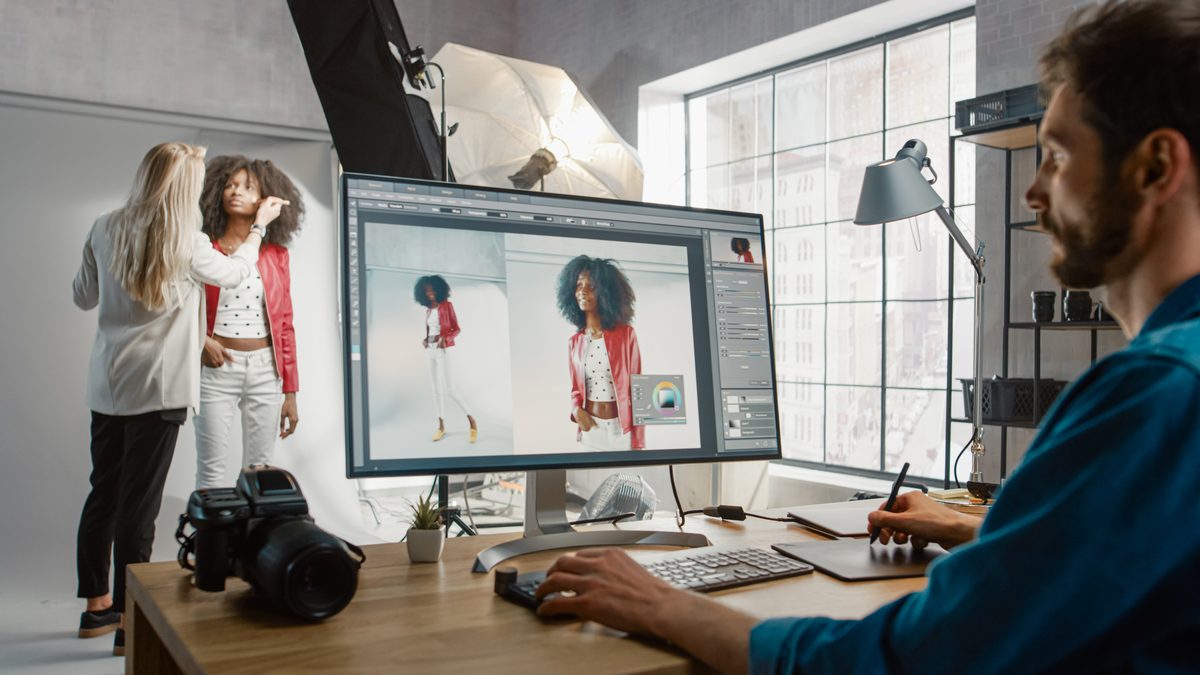
Portrait retouching typically involves the same core steps: smooth skin, brighten eyes, enhance color, add a subtle vignette. Doing this manually on every portrait takes 10-15 minutes. With a well-built action, it takes under a second — and you can fine-tune each adjustment after the fact. Here’s how to build a portrait enhancement action that’s both powerful and flexible. The Design Philosophy The biggest mistake in action design is baking in fixed values.

Noise Reduction Presets That Actually Preserve Detail

Noise Reduction Presets That Actually Preserve Detail

The default approach to noise reduction — crank the slider until the noise disappears — destroys detail along with the noise. Every noise reduction algorithm is fundamentally a trade-off between smoothness and sharpness. The goal is finding the sweet spot for each ISO range, then saving those settings as presets for consistent results. Why Generic Presets Fail Camera noise varies by sensor size, generation, and ISO setting. A noise reduction preset built for a Sony A7 IV at ISO 6400 will over-smooth a Fuji X-T5 at the same ISO, because the Fuji’s smaller sensor produces different noise characteristics.

Mastering Export Workflows in Photoshop: The Complete Guide

Mastering Export Workflows in Photoshop: The Complete Guide

Mastering Export Workflows in Photoshop: The Complete Guide I’ve spent countless hours watching designers tediously export files one by one, applying the same settings repeatedly. It’s painful to witness, honestly. That’s why I’m genuinely excited about what we’re covering today—because once you nail your export workflow, you’ll wonder how you ever lived without it. Why Custom Export Workflows Matter Here’s the thing: Photoshop’s default export dialog works fine for occasional use, but if you’re handling multiple files or exporting to different formats regularly, you’re leaving efficiency on the table.

Mastering Export Workflows: How to Share Your Photoshop Actions Without Losing Your Mind

Mastering Export Workflows: How to Share Your Photoshop Actions Without Losing Your Mind

Mastering Export Workflows: How to Share Your Photoshop Actions Without Losing Your Mind I’ve spent way too many hours troubleshooting corrupted action files and presets that refuse to load on someone else’s system. But I’ve finally cracked the code on reliable exports, and I’m genuinely excited to walk you through it. Why Standard Exports Fail (And How to Fix It) Here’s the thing: exporting actions from Photoshop’s default “Save Actions” dialog looks simple, but it’s deceptively fragile.

Mastering Export Workflows: How to Save Your Photoshop Actions Properly

Mastering Export Workflows: How to Save Your Photoshop Actions Properly

I’ve watched too many creators struggle with broken action files. Someone exports an action, shares it, and suddenly it won’t load on another machine. The preset icons disappear. The color values get corrupted. These problems aren’t random—they come from exporting the wrong way. After years of building and distributing actions, I’ve learned exactly what works and what doesn’t. Let me walk you through it. Why Export Matters More Than You Think Here’s the thing: exporting an action isn’t just about sharing.

Mastering Export Workflows: How to Save Time Without Losing Quality

Mastering Export Workflows: How to Save Time Without Losing Quality

Mastering Export Workflows: How to Save Time Without Losing Quality I’ve spent countless hours staring at export dialogs, tweaking settings for the hundredth time, wondering if there was a better way. Spoiler alert: there absolutely is. Export workflows are where Photoshop’s real power lives—and I’m genuinely excited to share what I’ve learned. Why Your Current Export Method Is Costing You Time Most people treat exporting like a one-off task. They finish a design, hit File > Export As, pick some settings, and hope for the best.