There is a specific kind of chaos that shows up on set when the brief is unclear, the styling is questionable, and someone in a position of authority is asking loaded questions. I have been in that room. Early in my commercial studio days, I watched an art director try to bait a junior photographer into criticizing a client’s concept out loud, right in front of the client. The photographer who survived that moment did so by staying completely focused on the work and refusing to take the bait. That memory came back to me hard while watching Watch the full tutorial on YouTube - specifically Jessica Kobeissi’s breakdown of Episode 9, Cycle 3 of SuperModelMe.
In this Jessica Kobeissi commentary, she walks through a karate-themed aerial photo shoot where the real drama has nothing to do with wire rigs or fabric styling. The judges are running a deliberate pressure test on the final four models, asking pointed questions designed to get someone to throw a competitor under the bus. One model doesn’t take the bait - and what’s fascinating, as Jessica notes, is that the model probably didn’t even fully register what the judges were attempting. For anyone who directs talent, coaches models, or manages a shoot environment, this episode is a masterclass in what pressure does to performance, and how a composed subject produces better images than a rattled one every single time.
Jessica’s commentary style is sharp and honest. She calls out the production budget problems, the styling choices that make no practical sense for the concept, and the manipulative dynamic on the judging panel - all without losing sight of what the models are actually trying to do. If you work with people in front of a lens, this breakdown is worth your time.
Step 1: Understand the Setup Before You Judge the Output
 Host introducing the karate aerial photo shoot concept
Jessica opens by orienting us in the episode: this is a wire-suspended aerial shoot framed around a karate movie aesthetic. Before she says a single word about what goes wrong, she gives us the concept. This is the right instinct for anyone analyzing photographic work. You cannot evaluate an image fairly without knowing what it was supposed to be. When I review work in my post-production consultancy, I always ask for the original brief first. A shot that looks flat might have been intentionally low-contrast for a specific printing substrate. Context is not an excuse - it is the frame.
Host introducing the karate aerial photo shoot concept
Jessica opens by orienting us in the episode: this is a wire-suspended aerial shoot framed around a karate movie aesthetic. Before she says a single word about what goes wrong, she gives us the concept. This is the right instinct for anyone analyzing photographic work. You cannot evaluate an image fairly without knowing what it was supposed to be. When I review work in my post-production consultancy, I always ask for the original brief first. A shot that looks flat might have been intentionally low-contrast for a specific printing substrate. Context is not an excuse - it is the frame.
Step 2: Assess the Styling Honestly and Early
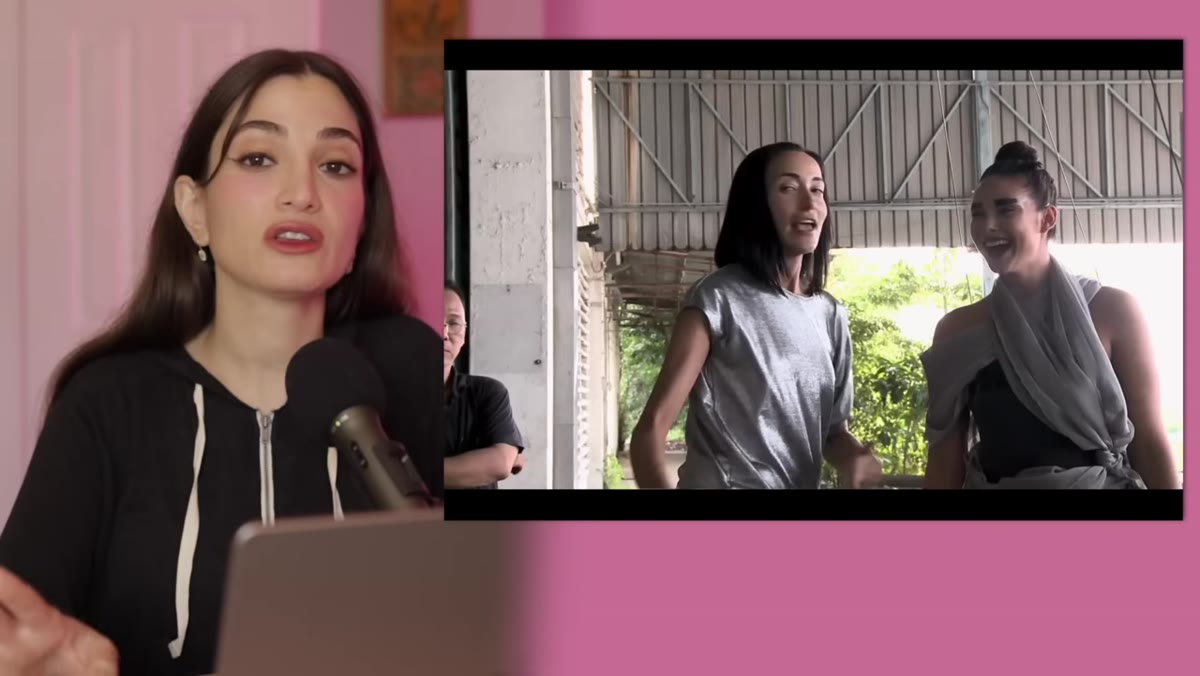 Model in aerial rig wearing draped fabric costume
Jessica does not hedge when the styling is not working. She notes that the female model’s costume - loose draped fabric with a knot at the center - is both visually weak and practically problematic. Fabric that can catch air unpredictably, get tangled in a wire rig, or simply read as “curtains” on camera is a liability, not a creative choice. When you are preparing a shoot, styling problems that seem minor on the ground become significant once movement, light, and speed enter the frame. Flag them before the first frame is captured, not after.
Model in aerial rig wearing draped fabric costume
Jessica does not hedge when the styling is not working. She notes that the female model’s costume - loose draped fabric with a knot at the center - is both visually weak and practically problematic. Fabric that can catch air unpredictably, get tangled in a wire rig, or simply read as “curtains” on camera is a liability, not a creative choice. When you are preparing a shoot, styling problems that seem minor on the ground become significant once movement, light, and speed enter the frame. Flag them before the first frame is captured, not after.
Step 3: Recognize What a Wire Rig Actually Demands from a Subject
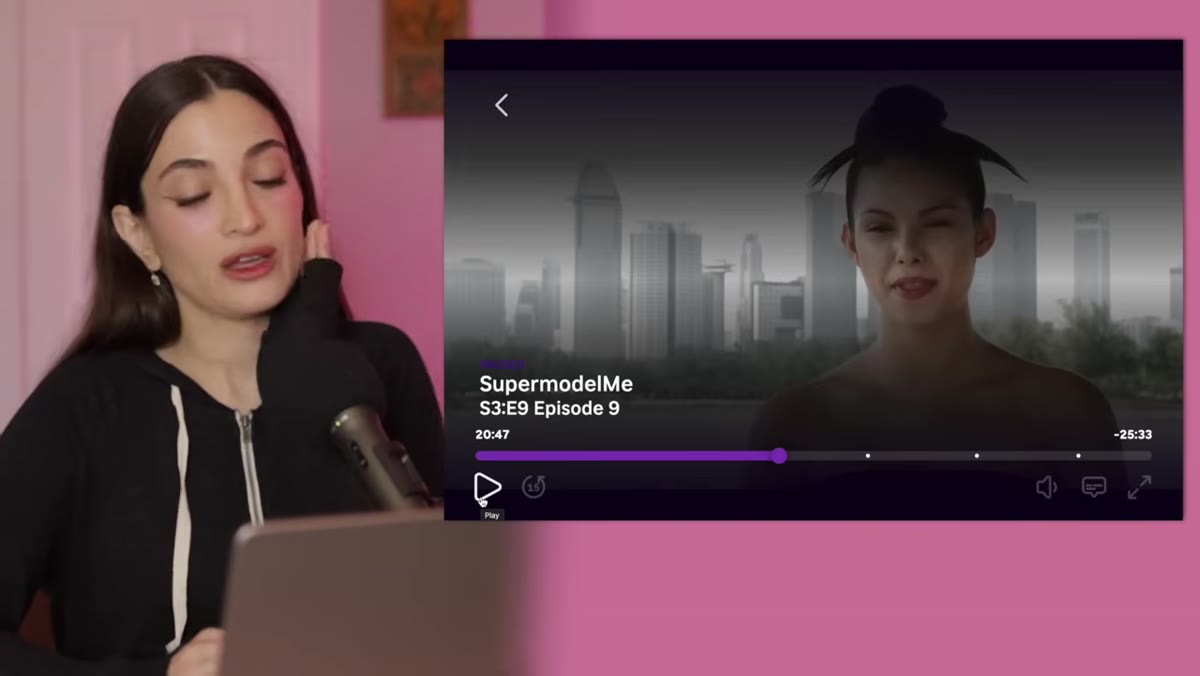 Model being suspended on cable wires during shoot
Wire and aerial work gives a subject a fraction of a second to commit to a pose before momentum takes over. Jessica points out that telling a model to “refine” a position mid-air is almost meaningless coaching - each launch is different, and the body cannot replicate exact placement when the physics change every time. As a photographer or director, your job is to give talent one clear, achievable intention before they go up, not a running critique while they are in motion. “Lead with energy, not contact” - the direction the stunt coordinator offers here - is exactly the kind of concrete, actionable instruction that translates into a usable frame.
Model being suspended on cable wires during shoot
Wire and aerial work gives a subject a fraction of a second to commit to a pose before momentum takes over. Jessica points out that telling a model to “refine” a position mid-air is almost meaningless coaching - each launch is different, and the body cannot replicate exact placement when the physics change every time. As a photographer or director, your job is to give talent one clear, achievable intention before they go up, not a running critique while they are in motion. “Lead with energy, not contact” - the direction the stunt coordinator offers here - is exactly the kind of concrete, actionable instruction that translates into a usable frame.
Step 4: Identify the Psychological Trap in the Judging Room
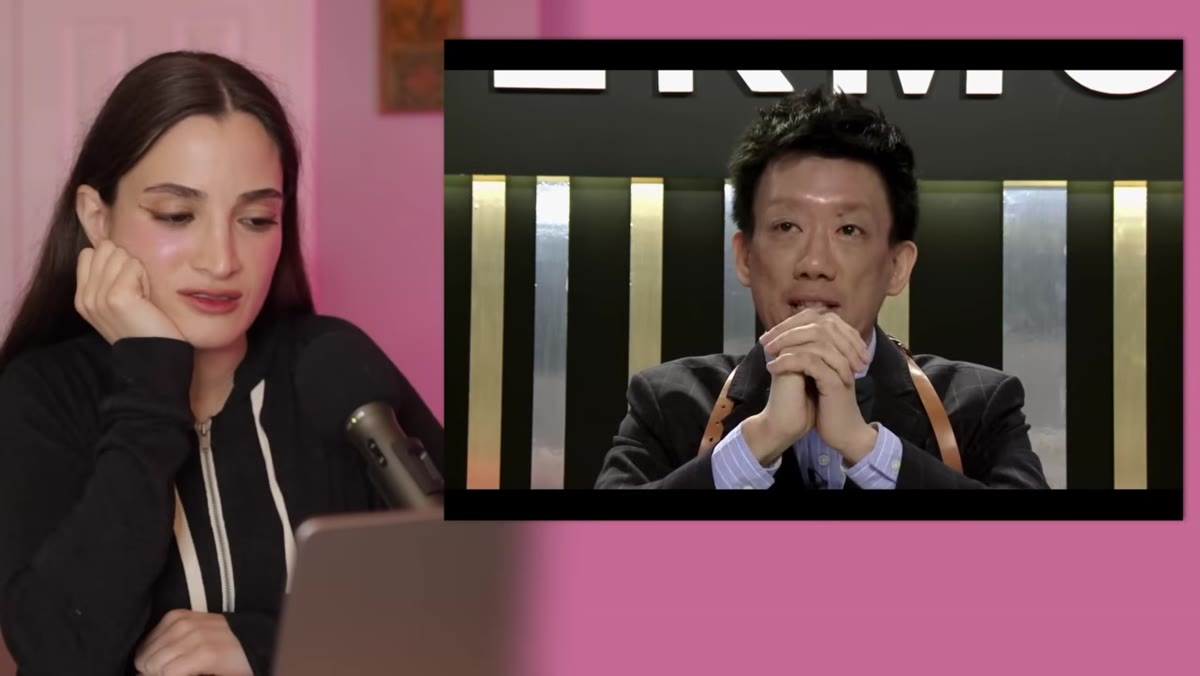 Judges asking models who doesn’t deserve to be there
This is where the episode gets genuinely instructive. The judges ask each model a question designed to get them to name a fellow competitor as undeserving. It is a classic pressure escalation technique - create social stakes, manufacture conflict, and see who cracks. Jessica’s read is clear: they are trying to destabilize the model being questioned. The model’s composure, whether intentional or instinctive, is what protects her. On a shoot, I have seen clients ask similarly loaded questions - “Do you think the last version was actually better?” or “Would another photographer have done this differently?” The answer is always to redirect to the work, not the politics.
Judges asking models who doesn’t deserve to be there
This is where the episode gets genuinely instructive. The judges ask each model a question designed to get them to name a fellow competitor as undeserving. It is a classic pressure escalation technique - create social stakes, manufacture conflict, and see who cracks. Jessica’s read is clear: they are trying to destabilize the model being questioned. The model’s composure, whether intentional or instinctive, is what protects her. On a shoot, I have seen clients ask similarly loaded questions - “Do you think the last version was actually better?” or “Would another photographer have done this differently?” The answer is always to redirect to the work, not the politics.
Step 5: Watch for the Moment Composure Becomes a Competitive Advantage
 Model deflecting judges’ loaded question without engaging
Jessica’s sharpest observation is that the model does not even seem to fully realize she is being tested. She just… stays in her lane. And that is the thing - composure does not always come from strategy. Sometimes it comes from being genuinely focused on the task. In a photo session, subjects who are mentally present in the concept rather than self-conscious about being evaluated almost always give you more usable frames. Your job as the person behind the camera is to create conditions where that focus is possible. Remove distractions. Give clear direction. Do not manufacture tension to get an emotional response - it rarely produces what you actually want.
Model deflecting judges’ loaded question without engaging
Jessica’s sharpest observation is that the model does not even seem to fully realize she is being tested. She just… stays in her lane. And that is the thing - composure does not always come from strategy. Sometimes it comes from being genuinely focused on the task. In a photo session, subjects who are mentally present in the concept rather than self-conscious about being evaluated almost always give you more usable frames. Your job as the person behind the camera is to create conditions where that focus is possible. Remove distractions. Give clear direction. Do not manufacture tension to get an emotional response - it rarely produces what you actually want.
Step 6: Use Production Problems as a Reference Point
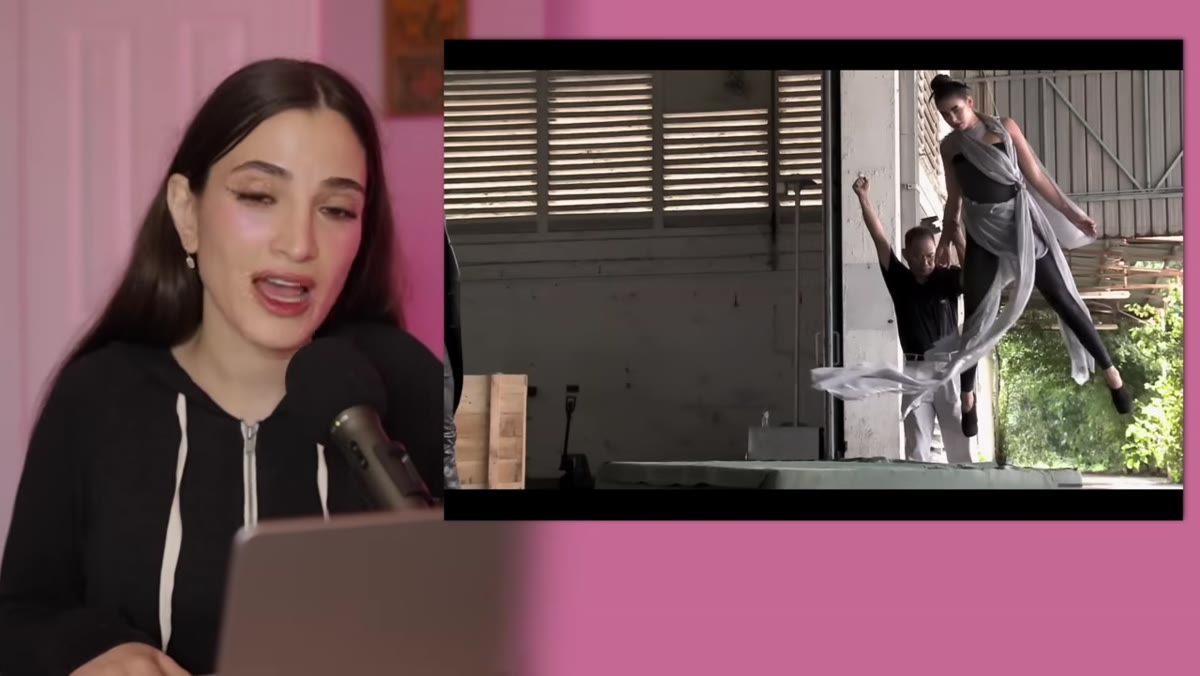 Stunt coordinator on set directing aerial movement
Jessica notes the production has a stunt coordinator - and treats it as a genuine positive in an episode full of questionable choices. She is right to flag it. Safety infrastructure on a complex shoot is not overhead, it is the foundation that makes everything else possible. I have watched productions cut the safety coordinator to save half a day’s budget and then spend three days in post trying to fix the results. The stunt coordinator here is giving directional coaching that the creative team should have locked in during pre-production. When you see a crew member doing work that should have been done earlier, that is a signal to look at your own pre-production checklist.
Stunt coordinator on set directing aerial movement
Jessica notes the production has a stunt coordinator - and treats it as a genuine positive in an episode full of questionable choices. She is right to flag it. Safety infrastructure on a complex shoot is not overhead, it is the foundation that makes everything else possible. I have watched productions cut the safety coordinator to save half a day’s budget and then spend three days in post trying to fix the results. The stunt coordinator here is giving directional coaching that the creative team should have locked in during pre-production. When you see a crew member doing work that should have been done earlier, that is a signal to look at your own pre-production checklist.
A Note from Fifteen Years of Watching Shoots Go Sideways
Jessica’s commentary resonates with me because the problems she identifies - weak styling, unclear direction, manufactured pressure, inadequate pre-production - are not specific to reality television. They show up in commercial shoots, e-commerce sessions, and editorial work with equal regularity. The difference between a shoot that produces strong images and one that produces chaos is usually not talent or budget. It is clarity: clear concept, clear direction, clear expectations. Models, clients, and crews all perform better when they know what success looks like before the first frame.
The single most useful thing this video demonstrates is that staying focused on your actual job - the image, the concept, the work - protects you from almost every trap that gets set around you. Whether you are the model, the photographer, or the person running post-production at midnight, that principle holds.
Watch the full tutorial on YouTube and see Jessica’s real-time breakdown for yourself. The karate shoot alone is worth studying as an example of what happens when a complex mechanical concept runs ahead of its own styling and direction.
Comments
Leave a Comment