I’ve spent fifteen years in commercial studios optimizing the back end of photography. Actions, batch processing, color pipelines. That’s my world. But the front end, the actual capture decisions that determine whether your footage or stills are even worth processing, those decisions are just as workflow-critical as anything that happens in Photoshop afterward. Get them wrong and no action or preset is going to save you.
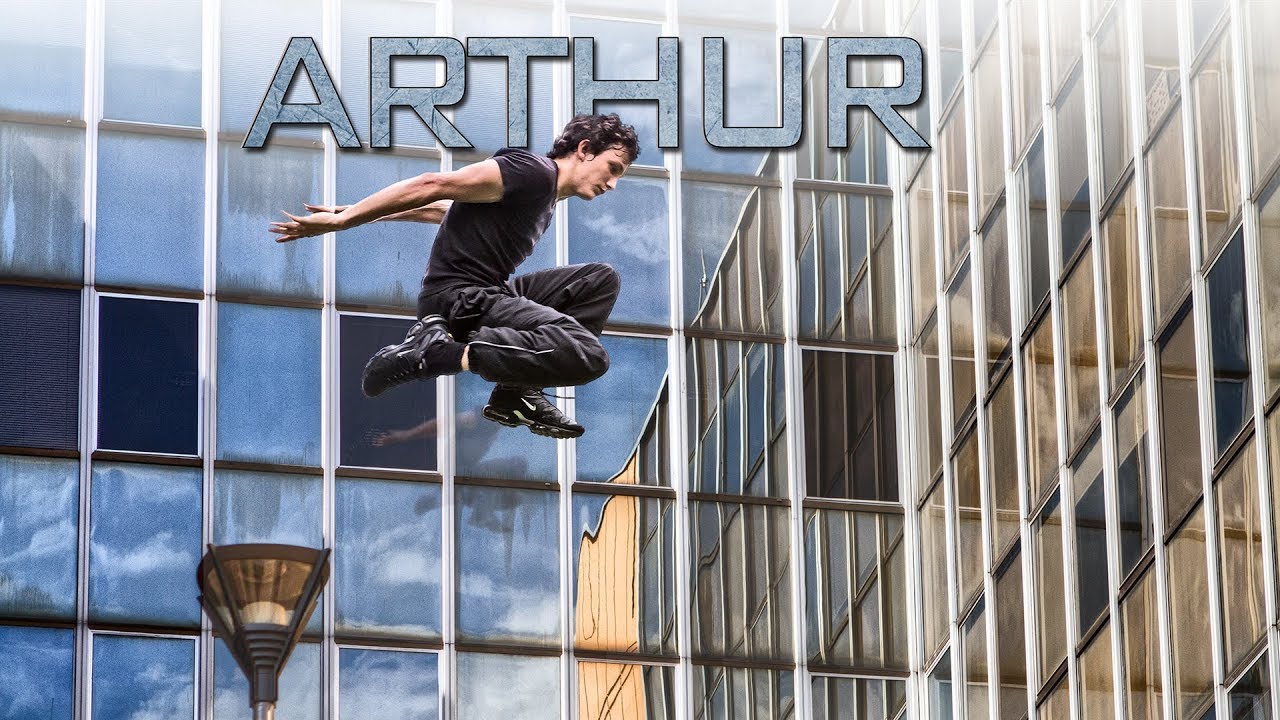
That’s why I keep coming back to directors like Serge Ramelli, who think visually and technically at the same time. His short action film featuring a parkour-running protagonist named Arthur is a great case study in what deliberate capture looks like before post-production ever enters the picture.
Why Camera Choice on a Shoot Like This Actually Matters
Ramelli shot this short on two Canon bodies: the Canon 7D and the Canon 5D Mark II. That’s not an accident and it’s not just budget compromise. These two cameras serve genuinely different functions in a production like this.
The 7D, with its APS-C crop sensor, gives you an effective focal length multiplier of 1.6x. On an action sequence where your subject is moving fast and you need reach without hauling a longer lens, that crop factor becomes a practical tool. You can put a 50mm on the 7D and it behaves closer to an 80mm. For tracking a parkour athlete across rooftops or through tight urban corridors, that extra reach without extra glass weight is meaningful.
The 5D Mark II brings the full-frame sensor into play, which changes the depth of field characteristics entirely. Shallower depth of field, more subject separation, a more cinematic look on wide establishing shots. Ramelli uses both bodies to give the edit more visual variety than a single camera could provide, and that variety is a post-production gift. When you’re cutting between shots with slightly different field perspectives and bokeh quality, the sequence breathes.
Pacing the Edit Through Capture, Not Just the Timeline
What strikes me watching this short is how much of the editing rhythm was clearly planned at the capture stage. Parkour is a discipline built on momentum, and the camera work respects that. Shots are short enough that the cut doesn’t kill the energy, but each shot is composed with enough intention that it doesn’t feel chaotic.
This is a lesson I’ve had to apply in commercial work with moving subjects. Whether it’s a product launch video or a lifestyle shoot with talent in motion, if you’re not thinking about how your clips will cut together while you’re rolling, you’re making your editor’s job exponentially harder. Ramelli is clearly editing in his head as he directs. The result is a sequence where the action carries through the cuts rather than stopping at them.
The Narrative Frame That Makes Action Footage Feel Like a Film
The short has a story, minimal but real. Arthur is late for school. He moves through the city in a way that’s unconventional and athletic. Then a girl gets into trouble and he responds. That three-beat structure, establish character, show capability, create stakes, is classic short film architecture. But it also does something practical for the footage.
A narrative frame gives you motivation for every shot. You’re not just filming someone do flips. You’re filming someone late for school who moves this way because that’s who he is. That context changes how the camera behaves. It creates reasons for close-ups on facial expression, wide shots that establish location and time pressure, cutaways that build tension. Without the story, you have a sizzle reel. With it, you have a short film.
For anyone building a portfolio of action work, this is a principle worth internalizing. Give your subject a reason to move and your camera a reason to follow.
What I’d Push Further in My Own Workflow
Here’s where I’d diverge from the approach, not to criticize it but because my context is different.
Ramelli is working in a run-and-gun documentary style, reacting to the action and capturing what happens. That’s appropriate for this kind of guerrilla short. But in my commercial work, even on shoots with lots of movement, I build a shot list tied directly to my post-production pipeline. Every clip gets a location tag and an intended grade before we roll. That way, when the footage lands in my system, I’m not making organizational decisions under deadline pressure.
I’ve also found that shooting action with any intention of doing heavy color grading afterward benefits from a flat picture profile in-camera. Ramelli’s footage has a filmic quality that suggests he was thinking about this. If you’re delivering to clients who want a cinematic look and you’re shooting in a high-contrast picture style, you’re limiting the headroom you have in post. A neutral or flat profile preserves your latitude and lets your Photoshop or Lightroom workflow do the heavy lifting on tone and color without fighting baked-in contrast.
The Single Lesson This Short Keeps Teaching Me
The most durable takeaway from Ramelli’s approach here is that production value comes from intentionality, not equipment. Two consumer-to-prosumer Canon bodies, a compelling subject, a simple story, and a director who knows what he wants to cut to. That combination produces something that feels genuinely cinematic.
Workflow optimization only multiplies what good capture decisions make possible. If you want to see how Ramelli pulls all of this together visually, with the actual movement of the camera and the rhythm of the edit in motion, watch the full video. No written breakdown replaces seeing it move.
Comments
Leave a Comment