
Every few years something shifts in the gear market that quietly changes how I advise clients on equipment budgets. I’ve been doing commercial post-production for fifteen years, and I’ve watched the DSLR era peak, mirrorless cannibalize it, and smartphone cameras eat the bottom of the market alive. But what’s happening right now feels different, and I wasn’t fully tracking the cause until I sat down with this Tony & Chelsea Northrup breakdown. Watch the full tutorial on YouTube before your next gear purchase, because some of what they cover will directly change the math you’re doing.
The short version is that camera prices are rising, the affordable entry-level tier is quietly disappearing, and the cause isn’t what most photographers assume. It’s not tariffs alone, it’s not supply chain problems from the pandemic, and it’s not simply that manufacturers want better margins. The actual pressure point is AI infrastructure, and it’s hitting photographers in a way that’s easy to miss if you’re not watching the component market. Tony and Chelsea connect those dots clearly, and I want to walk through the key points for anyone making a gear decision in the next twelve months.
Step 1: Understand Why AI Is Making Your Next Camera More Expensive
 Text on screen: “memory crisis” with camera price graphic
The mechanism here is straightforward once you see it. The AI data centers powering tools like ChatGPT require enormous amounts of memory, specifically the same type of NAND and DRAM used in cameras. Memory manufacturers built their production capacity around consumer electronics, and they simply cannot scale fast enough to meet AI infrastructure demand. Basic supply and demand then pushes component costs up across every device that uses memory, including cameras.
Text on screen: “memory crisis” with camera price graphic
The mechanism here is straightforward once you see it. The AI data centers powering tools like ChatGPT require enormous amounts of memory, specifically the same type of NAND and DRAM used in cameras. Memory manufacturers built their production capacity around consumer electronics, and they simply cannot scale fast enough to meet AI infrastructure demand. Basic supply and demand then pushes component costs up across every device that uses memory, including cameras.
Fujifilm disclosed that their memory cost forecast increased by 14 billion yen, which works out to roughly 50 million dollars added to their imaging division’s costs alone. They’ve already announced price increases up to 11% in some markets. Canon, Nikon, Sony, and Apple have all confirmed that increases are either live or incoming. If you’ve been watching prices tick up at your local camera retailer and assumed it was inflation or tariffs, memory costs are a significant part of the actual explanation.
Step 2: Recognize That Entry-Level Cameras Are Becoming Economically Unviable
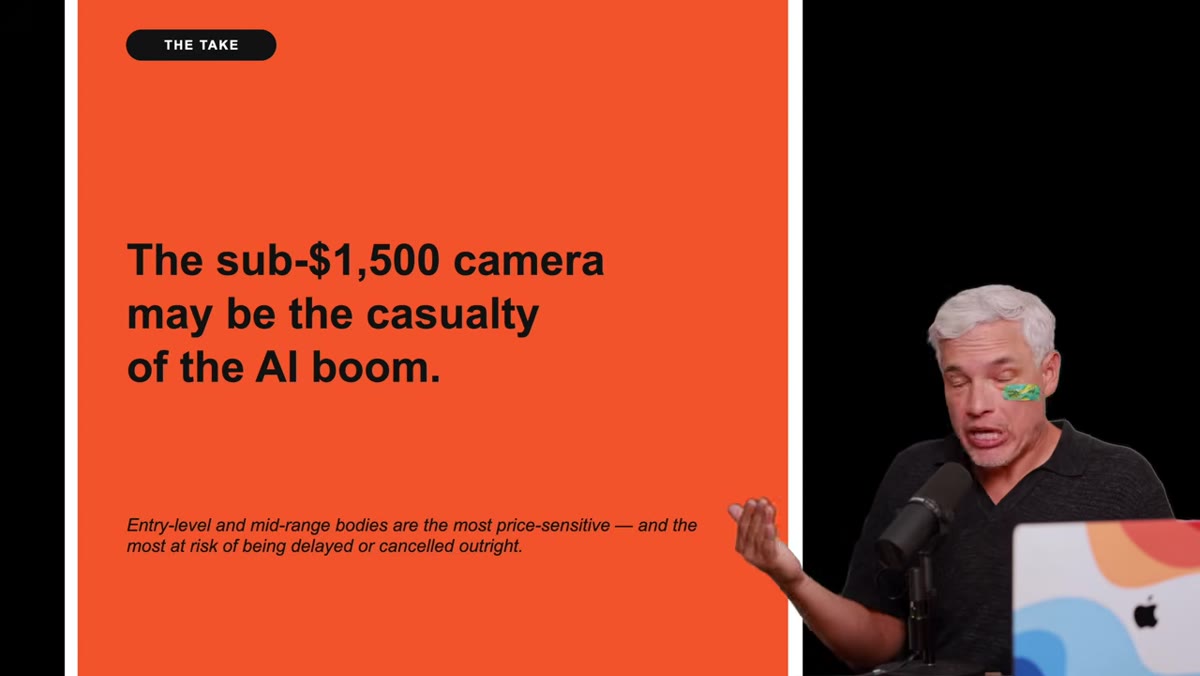 Chart showing decline of low-cost camera releases year over year
Here’s the part that matters most for photographers who recommend gear to students, assistants, or clients starting out. When a critical component becomes more expensive, manufacturers can absorb that cost on a $3,000 camera body more easily than on a $400 one. The margin on affordable cameras was already thin. Add 50 million dollars in new memory costs and the business case for a $300 or $500 camera essentially collapses.
Chart showing decline of low-cost camera releases year over year
Here’s the part that matters most for photographers who recommend gear to students, assistants, or clients starting out. When a critical component becomes more expensive, manufacturers can absorb that cost on a $3,000 camera body more easily than on a $400 one. The margin on affordable cameras was already thin. Add 50 million dollars in new memory costs and the business case for a $300 or $500 camera essentially collapses.
Tony makes this point plainly: we’re not seeing many entry-level releases right now because manufacturers can’t build them profitably. That has a real downstream effect. A generation of photographers who might have started on a cheap mirrorless body is now either shooting on a smartphone or skipping dedicated cameras entirely. For those of us who run studios or teach, this changes how we structure onboarding recommendations. The “start cheap and upgrade” path is narrowing.
Step 3: Read the Market Share Data Correctly
 Graph comparing interchangeable lens vs compact camera unit sales
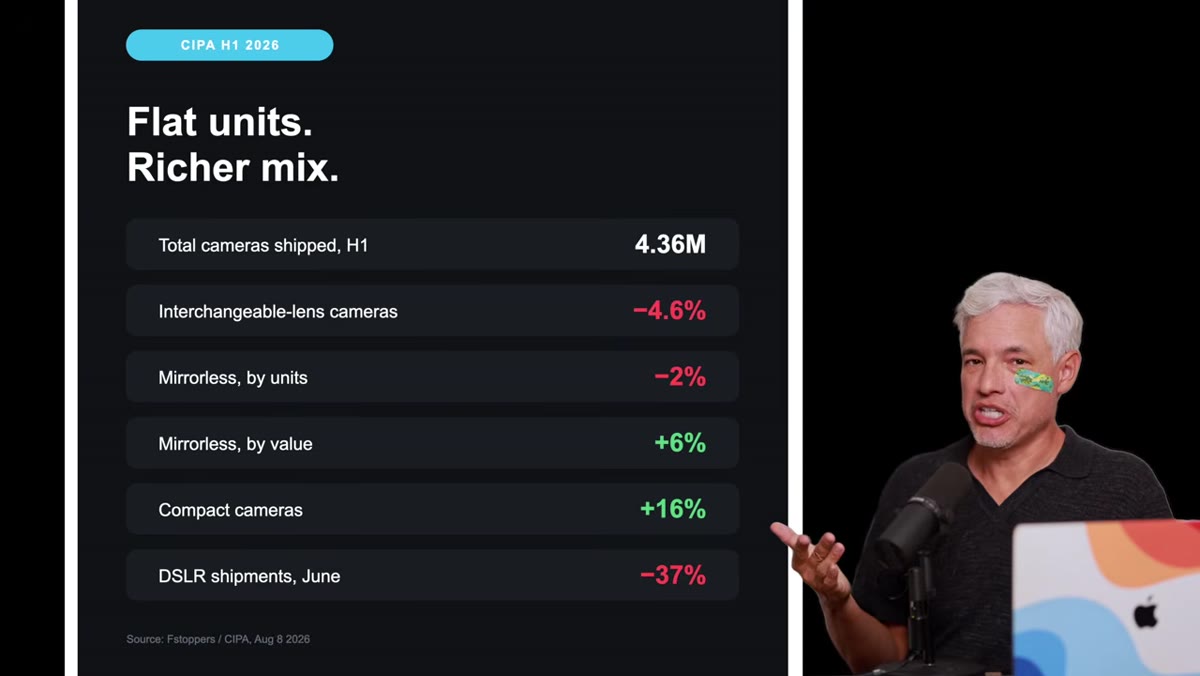
The industry headlines say the camera market is recovering, and technically they’re correct, but the composition of that recovery matters. Japan’s camera export data shows total unit volume holding roughly flat. What’s actually happening underneath that number is that interchangeable lens cameras, your DSLRs and mirrorless bodies, dropped about 4.6%, while compact cameras grew around 16%. Compacts are cheaper, so revenue growth is not keeping pace with unit growth.
Graph comparing interchangeable lens vs compact camera unit sales
The industry headlines say the camera market is recovering, and technically they’re correct, but the composition of that recovery matters. Japan’s camera export data shows total unit volume holding roughly flat. What’s actually happening underneath that number is that interchangeable lens cameras, your DSLRs and mirrorless bodies, dropped about 4.6%, while compact cameras grew around 16%. Compacts are cheaper, so revenue growth is not keeping pace with unit growth.
The driver cited for compact camera growth is social video. Younger buyers want something pocket-sized and shareable, not a full mirrorless kit. This is relevant for workflow professionals because it signals where manufacturer R&D dollars and marketing attention are flowing. If you’re waiting for aggressive innovation in mid-range mirrorless, the market incentives right now are pointed somewhere else.
Step 4: Factor Tariffs Into Your Drone and Accessories Budget Separately
 Graphic showing drone tariff percentages applied to imports
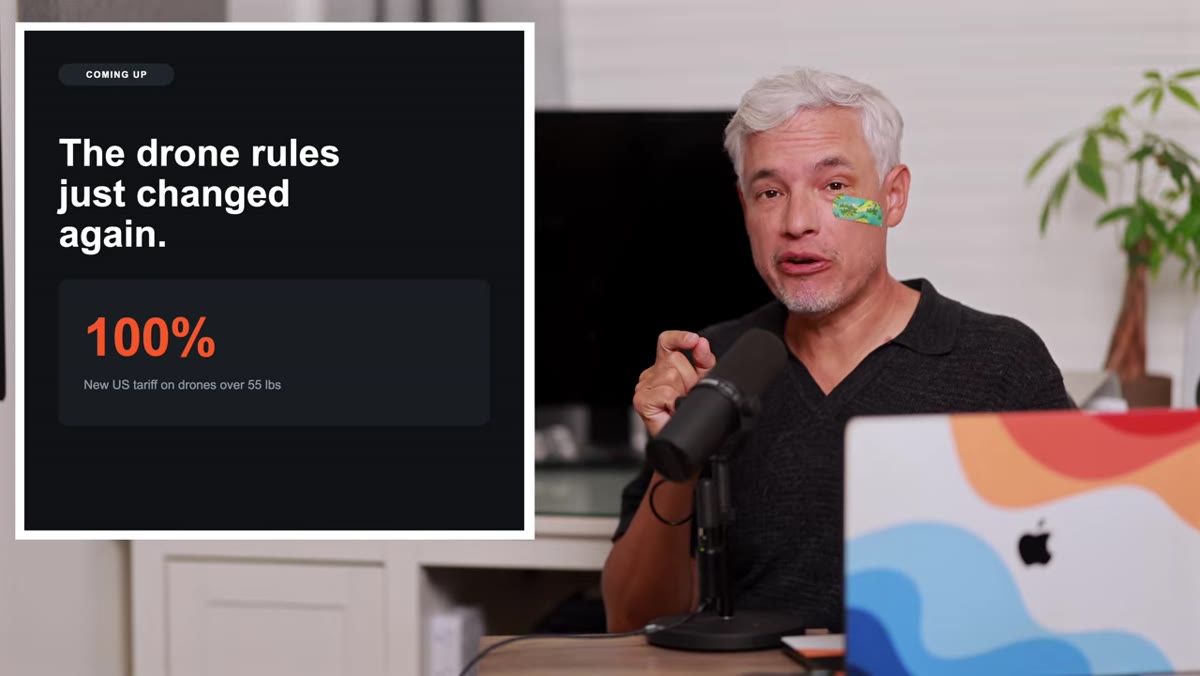
Drones are being hit by a separate cost pressure: import tariffs reaching up to 100% in the United States. If aerial photography is part of your commercial work, this deserves its own line item in your budget planning. The tariff situation is distinct from the memory cost issue, but both are landing at the same time, which means photographers who rely on a mix of camera bodies, accessories, and drones are getting squeezed from multiple directions simultaneously.
Graphic showing drone tariff percentages applied to imports
Drones are being hit by a separate cost pressure: import tariffs reaching up to 100% in the United States. If aerial photography is part of your commercial work, this deserves its own line item in your budget planning. The tariff situation is distinct from the memory cost issue, but both are landing at the same time, which means photographers who rely on a mix of camera bodies, accessories, and drones are getting squeezed from multiple directions simultaneously.
My practical advice here is the same thing I do with my own equipment list: separate your “mission-critical” gear from your “nice to have” gear and protect the first category’s budget ruthlessly. Drones are often in the second category for studio work. If aerial is core to your commercial offering, price your jobs to reflect current acquisition costs, not what you paid for your last unit.
Step 5: Watch the Sony-Tamron Acquisition for Lens Pricing Signals
 Sony and Tamron logos with acquisition news headline on screen
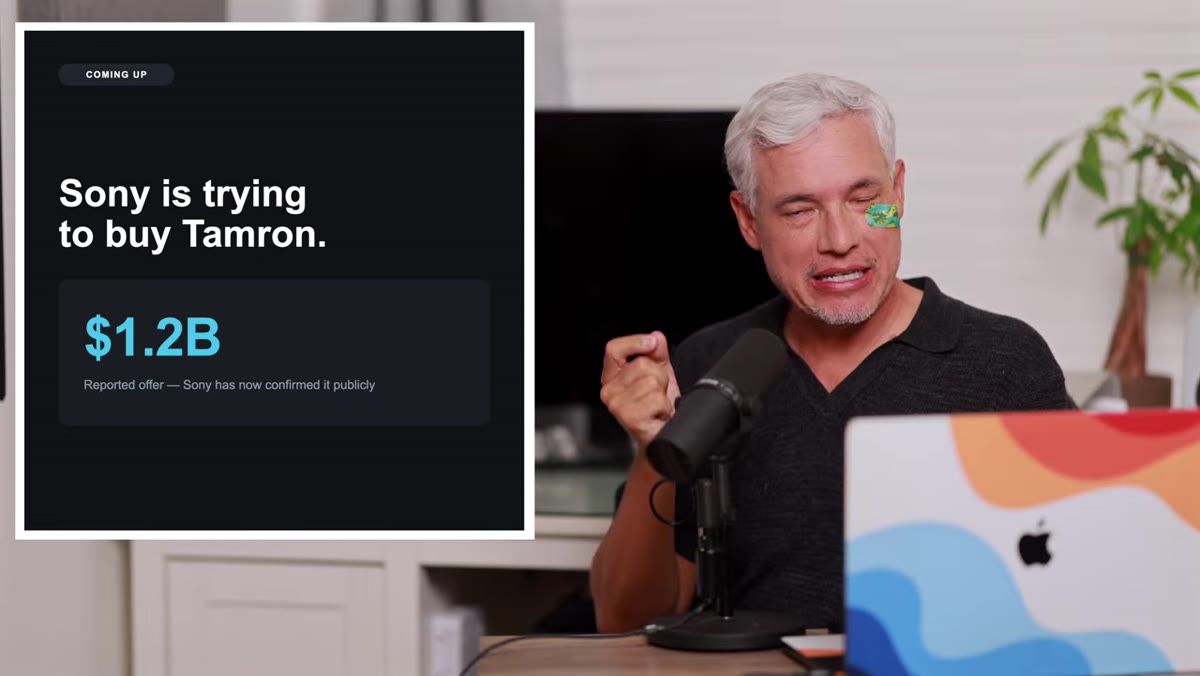
Sony is reportedly in the process of acquiring Tamron. Tamron has historically been one of the most affordable third-party lens options for Sony E-mount shooters. If that acquisition closes and Tamron moves closer to Sony’s pricing strategy, the affordable lens alternative disappears. This is speculative until the deal closes, but it’s worth watching if third-party glass is part of how you keep kit costs manageable.
Sony and Tamron logos with acquisition news headline on screen
Sony is reportedly in the process of acquiring Tamron. Tamron has historically been one of the most affordable third-party lens options for Sony E-mount shooters. If that acquisition closes and Tamron moves closer to Sony’s pricing strategy, the affordable lens alternative disappears. This is speculative until the deal closes, but it’s worth watching if third-party glass is part of how you keep kit costs manageable.
For post-production workflows, lens choice matters because it affects how much correction work lands in Lightroom or Photoshop. Lenses with strong manufacturer profiles, especially from Sony’s own lineup, tend to have tighter correction presets available. If affordable alternatives dry up and photographers are pushed toward kit glass at higher price points, expect the optical baseline of incoming files to actually improve slightly, which means less manual lens correction work downstream.
Step 6: Pay Attention to Apple’s Cryptographic Image Authentication
 Apple reference image authentication diagram on screen
Apple is building cryptographically signed image authentication into their camera pipeline. The idea is that you can verify, with mathematical certainty, that an image has not been manipulated after capture. Tony called this out as exactly what he’d asked for, and from a commercial photography standpoint I think the implications are significant for editorial, legal, and e-commerce work where image authenticity is increasingly scrutinized.
Apple reference image authentication diagram on screen
Apple is building cryptographically signed image authentication into their camera pipeline. The idea is that you can verify, with mathematical certainty, that an image has not been manipulated after capture. Tony called this out as exactly what he’d asked for, and from a commercial photography standpoint I think the implications are significant for editorial, legal, and e-commerce work where image authenticity is increasingly scrutinized.
If this technology propagates beyond Apple into the broader camera ecosystem, it changes how we document our editing workflows. A client who can verify that a delivered composite was modified would need a different kind of release or documentation than one who receives a corrected but unaltered product shot. Start thinking now about how you’d explain your post-production process in a world where untouched originals carry a verifiable certificate.
My Take: Budget Timing Just Became More Strategic
I keep a spreadsheet tracking every hour my Photoshop actions and batch workflows have saved me. The current number sits above 2,400 hours. I built that system partly because gear and software costs forced me to find efficiency wherever I could. The lesson from this video is that gear costs are entering another pressure cycle, and the photographers who adapt earliest are the ones who lock in current pricing before increases land, build workflows that extend the useful life of existing equipment, and stop assuming that a cheap entry point will always exist.
If you’ve been sitting on a camera upgrade decision, the data Tony and Chelsea present suggests the window for mid-range mirrorless at current prices may be shorter than you think. Do the math with today’s numbers, not what you’re hoping prices will do.
The single most important takeaway is this: the forces raising camera prices right now are structural, not cyclical. Memory demand from AI infrastructure isn’t going back down, and manufacturer pricing will reflect that. Plan your gear budget accordingly, and watch the full Tony & Chelsea Northrup breakdown on YouTube for the complete picture, including the two new mirrorless cameras in development and the GoPro survival discussion that didn’t make it into this summary.
Comments (6)
This saved me so much time on my last edit. Wish I'd found this sooner.
This should be required reading for anyone starting out.
Quality content like this is rare. Keep it up.
This is fantastic. I've been recommending this approach to my readers too.
Would love to see a follow-up going deeper into this topic.
This is fantastic. I've been recommending this approach to my readers too.
Leave a Comment